

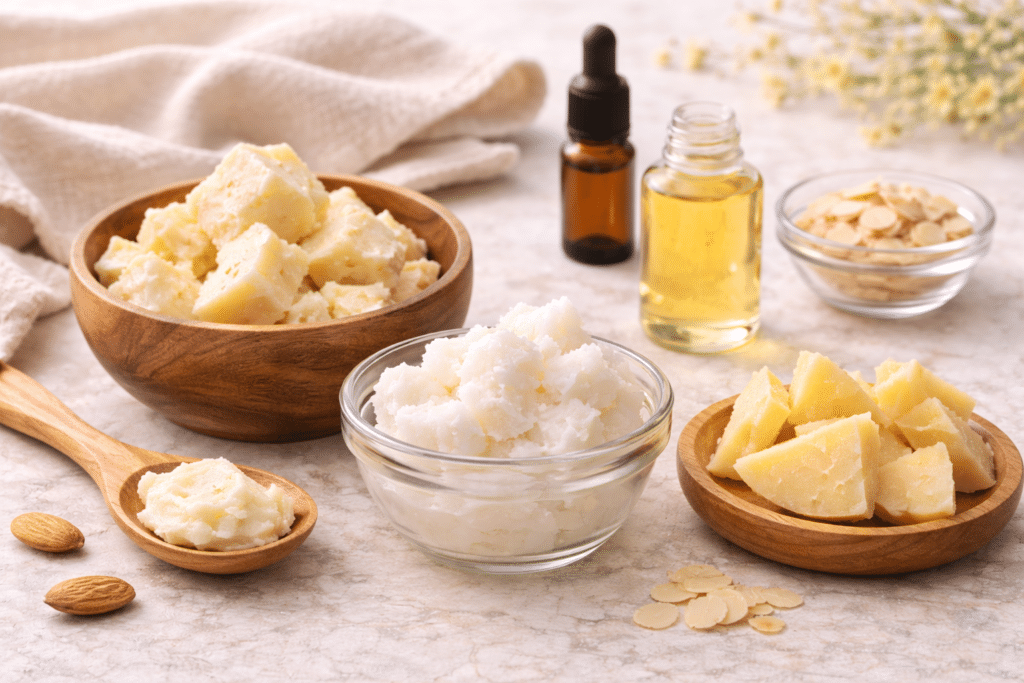
DIY body butter projects are often appreciated for their simplicity and flexibility. While the finished result may look luxurious, the ingredients used in body butter projects are typically familiar, widely available, and easy to work with. Understanding these ingredients helps makers explore creative ideas with confidence and intention.
This guide introduces the most commonly used ingredients in DIY body butter projects, focusing on their role in texture, appearance, and creative versatility rather than technical formulation.
Why Ingredient Choice Matters in DIY Body Butter
In DIY body butter projects, ingredient selection plays a key role in how the final product looks and feels. Different combinations influence firmness, softness, and overall consistency, which makes ingredient choice an important part of the creative process.
Rather than following strict formulas, many makers enjoy experimenting with ingredients to better understand how each element contributes to the final texture. This approach keeps body butter projects approachable and adaptable.
Plant-Based Butters
Plant-based butters form the foundation of most DIY body butter projects. These ingredients are solid or semi-solid at room temperature and help create the thick, rich consistency body butter is known for.
Commonly used butters include shea butter, cocoa butter, and mango butter. Each butter has its own natural firmness and melting point, which can influence the density and appearance of the final blend.
From a creative standpoint, choosing different butters allows makers to experiment with texture and structure. Some prefer softer finishes, while others enjoy creating denser or whipped styles depending on the project.
Oils Used in Body Butter Projects
Oils are often added to balance the firmness of plant-based butters. They help adjust consistency and contribute to a smoother finish.
Popular choices include sweet almond oil, coconut oil, jojoba oil, and similar lightweight oils. These oils blend easily with butters and allow for flexibility when adjusting texture.
Using oils also gives makers the opportunity to customise how firm or soft a body butter feels, which is especially useful when working with different climates or storage conditions.
Optional Add-Ins for Creative Customisation
Many DIY body butter projects include optional add-ins to enhance appearance or personalisation. These additions are often used sparingly and chosen for creative reasons rather than technical ones.
Examples include vitamin E oil for stability, cosmetic-safe fragrance oils for scent, or natural colourants for visual interest. These elements allow makers to tailor each project to their preferences.
When using optional add-ins, many people enjoy testing small batches first. This keeps the process low-pressure and encourages exploration.
Texture and Whipping Techniques
Ingredient selection also influences whether a body butter is dense or whipped. Whipped body butter projects typically involve incorporating air during mixing, which creates a lighter, fluffier appearance.
Softer butters and oils tend to whip more easily, while firmer ingredients produce thicker textures. Experimenting with these combinations helps makers discover which styles they enjoy creating most.
Storage Considerations
Understanding ingredients also helps with storage planning. Because body butter projects often contain ingredients that respond to temperature, storage location can affect appearance and consistency.
Many makers choose wide-mouth jars or containers that allow for easy scooping and presentation. Storing projects away from direct heat helps maintain their original texture.
Choosing Ingredients Based on Project Goals
DIY body butter projects can be adapted for many creative purposes, including personal use, decorative jars, or gift ideas. Choosing ingredients based on these goals helps streamline the process.
For example, a firmer blend may work better for warmer environments, while a softer blend may suit cooler conditions. Thinking about how and where the project will be used can guide ingredient choices.
Keeping DIY Body Butter Projects Simple
One of the advantages of DIY body butter projects is that they don’t require a long list of ingredients. Many successful projects rely on just a few core components.
Keeping ingredient lists simple allows makers to focus on creativity, presentation, and enjoyment rather than complexity. This approach makes DIY body butter accessible to beginners and enjoyable for experienced creators alike.
Final Thoughts
Understanding common ingredients used in DIY body butter projects helps makers feel more confident when exploring creative ideas. By learning how butters, oils, and optional add-ins interact, it becomes easier to customise textures and presentation.
Whether you prefer minimal blends or enjoy experimenting with small variations, ingredient awareness is a valuable part of the DIY body butter experience.