

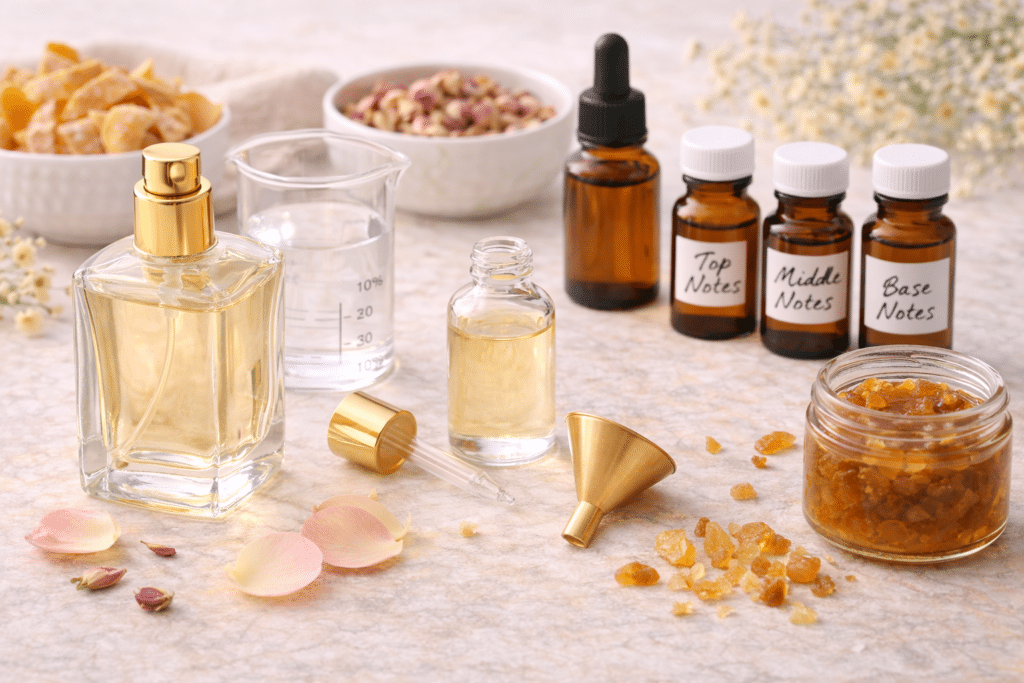
DIY perfume is a creative project that combines scent exploration with hands-on crafting. While finished perfumes may seem mysterious, the ingredients behind them are surprisingly simple. Understanding the basic components of DIY perfume helps beginners feel confident experimenting with small-batch blends at home.
This guide breaks down the most commonly used DIY perfume ingredients, how they function within a blend, and why they’re chosen for creative fragrance projects.
The Core Components of DIY Perfume
Most DIY perfume projects are built from a small group of foundational ingredients. Each plays a specific role in how the final scent smells, wears, and evolves over time.
Carrier Liquids
Carrier liquids form the base of a DIY perfume. They dilute aromatic ingredients and allow fragrance notes to blend evenly.
- Perfumer’s Alcohol: A lightweight, fast-evaporating base commonly used in spray perfumes.
- Fractionated Oils: Clear, odourless oils often used in roll-on or solid perfume projects.
- Distilled Water: Occasionally used in water-based fragrance mists.
The choice of carrier affects how the perfume feels on the skin and how long the scent lasts.
Aromatic Ingredients
Aromatic ingredients provide the scent itself. These can be blended in countless ways to create unique fragrance profiles.
- Essential Oils: Concentrated plant extracts commonly used for scent creation.
- Fragrance Oils: Blended scent oils designed to offer consistent aroma profiles.
- Infusions: Carrier liquids infused with botanicals for subtle fragrance notes.
Beginners often start with just two or three aromatic ingredients to keep blends simple and balanced.
Fixatives and Supporting Elements
Some ingredients help stabilise scent blends or support how aromas develop over time.
- Resins or balsams used sparingly for depth
- Light botanical infusions for warmth
- Complementary base notes to anchor lighter scents
These elements are optional but can enhance the overall fragrance experience.
Understanding Fragrance Notes
DIY perfume blends are often described using a note structure that explains how a scent unfolds.
Top Notes
Light, fresh scents noticed immediately after application. These fade the fastest.
Middle Notes
The heart of the perfume, forming the main body of the fragrance.
Base Notes
Deep, long-lasting aromas that remain after lighter notes fade.
Balancing these layers helps create a more rounded and enjoyable DIY perfume project.
Choosing Ingredients for Small-Batch Projects
For beginners, small-batch perfume projects are ideal. They allow experimentation without waste and make it easier to refine blends.
- Start with familiar scent profiles
- Use minimal ingredients
- Keep measurements consistent
Documenting blends helps track what works and what can be adjusted in future projects.
Storage and Handling Considerations
Proper storage helps maintain ingredient quality over time.
- Store liquids in cool, dark areas
- Use airtight glass containers
- Label blends clearly
Good storage habits support long-term creativity and consistency.
Why Ingredient Knowledge Enhances DIY Perfume Projects
Understanding perfume ingredients transforms DIY fragrance from guesswork into an enjoyable creative process. With basic knowledge, makers can explore scent combinations confidently and build blends that feel intentional and personal.
DIY perfume isn’t about perfection — it’s about exploration, creativity, and discovering how different ingredients work together in small, hands-on projects.