

DIY perfume projects often follow a simple and repeatable structure that makes experimenting with fragrance approachable and enjoyable. Rather than focusing on exact formulas, most DIY perfume projects are organised around stages that help creators explore scent combinations in a relaxed, creative way.
Understanding this basic structure can help beginners feel more confident when starting new perfume projects, while also giving experienced DIY enthusiasts a framework for refining their creative process.
Starting With a Creative Concept
Most DIY perfume projects begin with a loose concept rather than a strict plan. This could be inspired by a season, a mood, a favourite ingredient, or even a memory. The goal at this stage is not precision, but direction.
Some creators write short notes describing the feeling they want the fragrance to evoke, while others simply choose one key scent as a starting point. This creative foundation helps guide ingredient selection later in the process.
Selecting and Grouping Ingredients
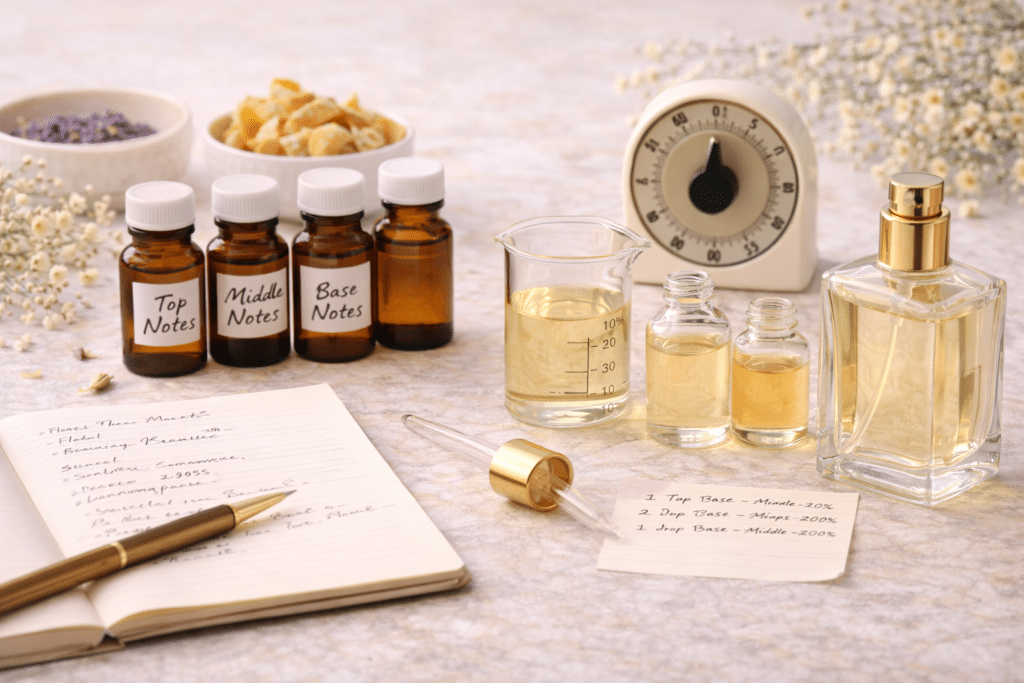
Once a concept is established, ingredients are typically grouped by scent type rather than exact measurements. Many DIY perfume projects work with fragrance layers such as lighter scents, balanced middle notes, and deeper base elements.
- Light or fresh scents for initial impressions
- Balanced scents to create cohesion
- Deeper scents to add depth and longevity
This grouping approach allows flexibility and encourages experimentation without overcomplicating the project.
Blending in Small Test Batches
DIY perfume projects are usually created in small batches, especially during the testing phase. Small quantities make it easier to adjust scent combinations without wasting materials.
Many creators use simple tools such as droppers or pipettes to blend small amounts, observing how the fragrance changes over time. This step is less about perfection and more about learning how scents interact.
Observing and Adjusting Over Time
After blending, DIY perfume projects are often left to rest for a short period so the scents can settle. During this time, creators may take notes on how the fragrance develops, noting changes in strength, balance, or character.
This observation phase is an important part of the project structure, as it encourages patience and reflection rather than immediate results.
Finalising or Reworking the Project
Some DIY perfume projects reach a natural conclusion and are considered finished, while others are revisited and adjusted over time. It’s common for creators to refine a blend multiple times or use it as inspiration for future projects.
This flexible ending is what makes DIY perfume projects enjoyable — there is no pressure for a single perfect outcome.
Final Thoughts
DIY perfume projects are typically structured around creativity, experimentation, and small-batch exploration. By following a simple framework — concept, ingredient grouping, blending, observation, and refinement — creators can enjoy perfume-making as a relaxed and rewarding creative hobby.
