

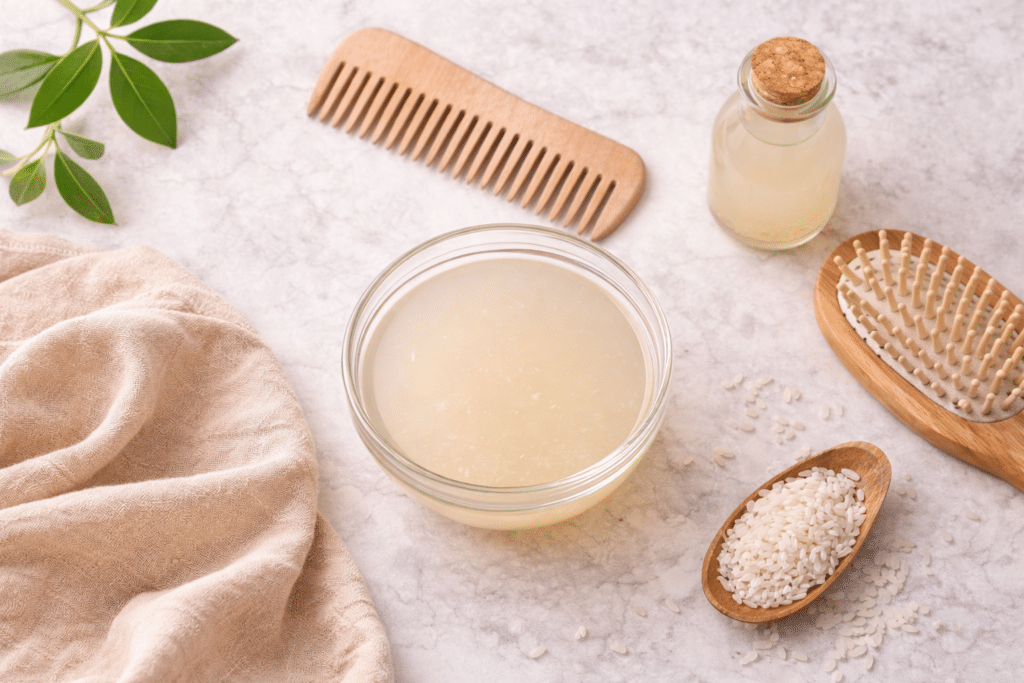
Rice water has become a frequently discussed addition to hair care routines thanks to its simplicity and historical use. Instead of focusing on recipes or growth claims, this guide explains the basics of how rice water feels, why its scent changes, and how it is typically included in everyday hair care.
This article also links to related guides that delve deeper into particular aspects like how rice water is used in routines and why it can develop a strong smell. Together, these pages form a complete reference for anyone curious about rice water hair care without jumping into step-by-step instructions.
What Rice Water Is and How It Feels
Rice water is the milky, starchy liquid that remains after rinsing or soaking rice. Because it contains water-soluble nutrients and starches, it feels thin and slightly silky compared with straight water or oil-based products.
This light texture is one reason people describe rice water as feeling refreshing or smooth rather than heavy. However, perception varies — some find the sensation unfamiliar at first, especially if they’re used to creamier products.
For an expanded look at what rice water is, its texture, and how people often think about it in hair care, see Rice Water for Hair: Uses, Texture & Expectations.
Texture in Hair Care: Expectations vs Reality
Texture matters a lot in hair routines because it affects how a product spreads and feels on both wet and dry hair. Unlike conditioners or oils, rice water won’t create a thick coating — it acts more like a rinse or a light enhancer.
Because of this, many people treat rice water as a *step* within a broader routine, not a stand-alone product. It’s typically used in combination with other products that provide moisture, manageability, or protection.
Why Rice Water Can Smell Strong
One of the most talked-about aspects of rice water is its scent. Fresh rice water often has only a mild, starchy smell, but over time or under certain conditions it can develop a stronger scent that some find noticeable.
If you’ve ever wondered why rice water smells the way it does, this guide explains what causes rice water’s scent and what that usually means. Understanding this can help anyone using rice water feel more comfortable with sensory differences in natural hair care products.
How Often People Use Rice Water in Hair Routines
Rice water isn’t usually applied every single day like a leave-in conditioner. Instead, most people incorporate it on specific wash days or as a periodic step depending on their hair type, hair goals, and overall routine.
Some hair types or routines benefit from occasional rice water use, while others include it more regularly. Rather than fixed rules, frequency varies widely. For insight into common patterns, see How Often People Use Rice Water in Hair Routines.
Rice Water and Hair Type Considerations
Because rice water is light and water-based, it tends to interact differently with different hair textures. For example:
- Fine hair: Some people with finer strands enjoy rice water because it feels light and doesn’t weigh hair down.
- Curly hair: People with curly hair may include rice water as a refresh or rinse on wash days to add slip.
- Thicker hair: In coarser textures, rice water is usually paired with heavier moisturisers to balance feel and manageability.
The key idea is that rice water’s role changes depending on texture and routine — but in all cases it’s part of a larger hair care strategy rather than a replacement for other products.
Rice Water’s Role in Modern Hair Care
Rice water is often embraced for its simplicity and cultural history. But its role in contemporary hair routines is best understood as a complementary step rather than a primary treatment. People typically use it to support other actions like cleansing, conditioning, and hydration.
When introduced with realistic expectations about texture and scent, rice water can feel like a natural, pleasant addition rather than something that must be “done right.”
Final Thoughts
Rice water for hair doesn’t have to be complicated. By focusing on its texture, what its scent means, and how it fits into routines naturally, you can decide how — or if — it fits into your own hair care habits.
This guide is designed to work as an anchor for more detailed articles that explore specific aspects of rice water hair care in depth.