

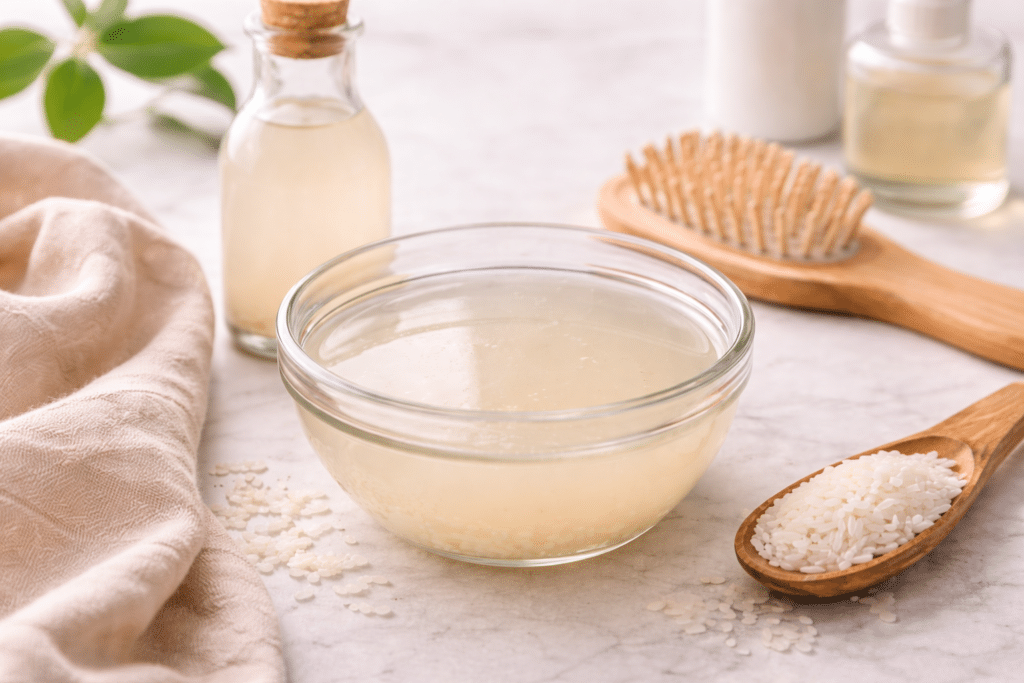
Rice water has become a popular topic in hair care, often mentioned in DIY routines and traditional beauty practices. While many people first encounter rice water through recipes or treatments, understanding what rice water is and how it’s commonly used can help set more realistic expectations.
This guide explores rice water from an educational perspective — focusing on its texture, how people typically include it in hair routines, and what to expect when using it, without diving into step-by-step methods.
What Is Rice Water?
Rice water is the cloudy liquid that comes from soaking or rinsing rice in water. It contains naturally released starches and compounds from the rice, which give it a distinct appearance and feel.
In hair care discussions, rice water is often described as a lightweight, water-based addition to routines rather than a replacement for conditioners or oils. Its simplicity is part of what makes it appealing to people exploring DIY beauty.
What Does Rice Water Feel Like on Hair?
One of the first things people notice about rice water is its texture. Unlike oils or creams, rice water feels thin and watery, with a slightly silky or starchy slip.
Because of this, rice water is usually treated as a short-term step in a routine rather than something that leaves a heavy residue behind. How it feels can vary depending on hair type, existing products, and how it’s incorporated into a routine.
Why Rice Water Smells the Way It Does
Another common point of curiosity is rice water’s scent. While fresh rice water may have a mild, neutral smell, it can develop a stronger or more noticeable scent over time.
This change often surprises people who are new to using it. If you’ve noticed rice water smelling strong or unusual, this article explains why rice water smells the way it does and what that usually means.
Understanding that scent changes are natural helps manage expectations and avoid unnecessary confusion.
How Rice Water Is Commonly Used in Hair Routines
Rice water is rarely used as a daily, standalone product. Instead, most people treat it as an occasional or supportive step within a broader hair care routine.
Some people include rice water on specific wash days, while others use it intermittently depending on season, styling habits, or personal preference. There isn’t a single “right” approach — routines tend to be flexible rather than rigid.
This overview of how often people use rice water in hair routines explores common patterns without setting strict rules.
What Rice Water Is — and Isn’t
Rice water is often discussed online with very strong claims, which can create unrealistic expectations. In practice, most people view rice water as a complementary element rather than a miracle solution.
It’s not a replacement for cleansing, conditioning, or regular hair care practices. Instead, it tends to sit alongside other routine steps, contributing to overall hair care habits rather than defining them.
Managing Expectations When Using Rice Water
Understanding rice water’s texture, scent, and typical usage helps prevent disappointment. People who enjoy using rice water usually do so because it fits comfortably into their routine — not because it promises dramatic results.
Expectations around feel, scent, and frequency matter just as much as the ingredient itself. Paying attention to how rice water interacts with your existing routine often leads to a better experience.
Rice Water as Part of a Balanced Routine
Rice water works best when viewed as one small part of a larger hair care picture. Many people pair it with moisturising products, gentle cleansing routines, and simple styling habits.
Keeping routines uncomplicated and adaptable makes it easier to decide whether rice water is something you enjoy using long term.
Final Thoughts
Rice water for hair is best understood through realistic expectations rather than hype. By focusing on what rice water is, how it feels, and how people commonly use it, it becomes easier to decide whether it fits into your routine.
Like many DIY beauty ingredients, rice water is highly personal — and understanding it is the first step to using it comfortably.