

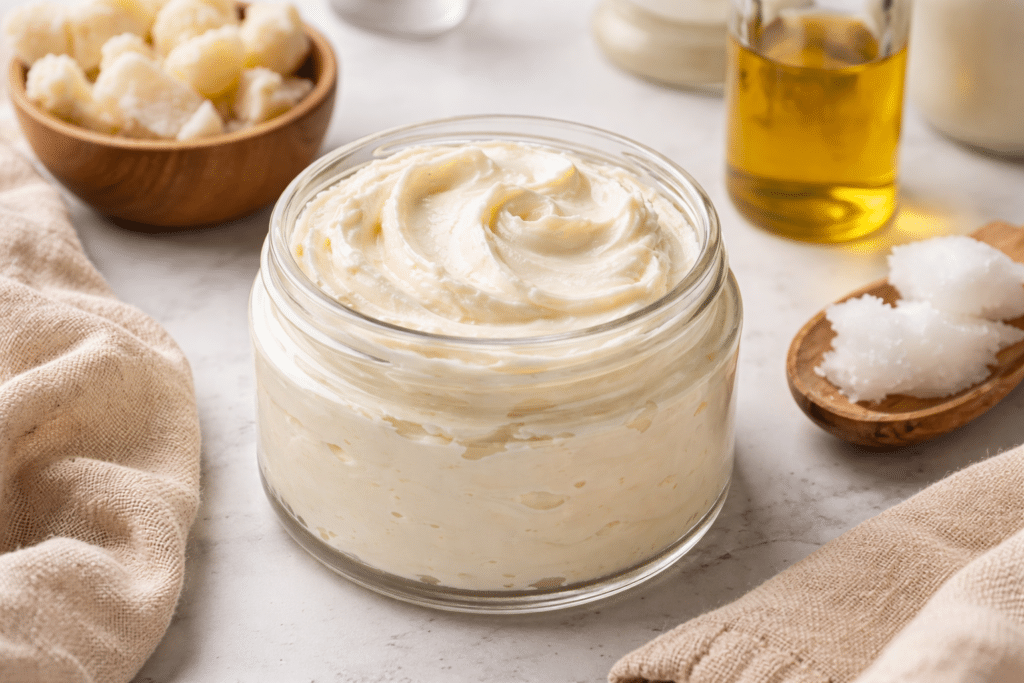
Homemade body butter is loved for its rich, nourishing feel — but one of the most common complaints is that it can feel too greasy on the skin. If you’ve ever applied a homemade body butter only to feel slick, shiny, or slow-drying, you’re not alone. This is a very common experience, especially for people new to DIY skincare.
The good news is that a greasy feel doesn’t necessarily mean something is “wrong.” In most cases, it simply comes down to texture, ingredient balance, and how body butter interacts with the skin. Understanding why body butter feels oily — and how people typically balance that texture — can help you choose or use homemade products more comfortably.
What Gives Body Butter Its Rich Feel?
Body butter is designed to be richer than lotions or creams. It usually contains a combination of butters and oils that melt on contact with the skin, creating a protective, moisturising layer. If you’re new to this type of product, this introduction to DIY body butter explains why these products are naturally thicker and more concentrated than standard moisturisers.
This richness is what makes body butter so appealing, particularly for dry areas like elbows, legs, and hands. However, that same richness can sometimes translate into a greasy or heavy feeling, especially if too much product is applied or if the texture doesn’t suit your skin type.
Common Reasons Homemade Body Butter Feels Greasy
1) High Oil Content
Many homemade body butters rely heavily on oils and solid butters. Oils naturally sit on the surface of the skin before absorbing, and some absorb more slowly than others. When a formula leans too heavily toward slow-absorbing oils, the result can feel slick rather than nourishing.
2) Heavy Butters
Some plant butters are naturally dense and occlusive. While they’re excellent for locking in moisture, they can feel heavy if used in large amounts or in warmer weather. This heaviness is often mistaken for greasiness.
3) Skin Type Differences
Skin type plays a big role in how body butter feels. What absorbs beautifully into dry skin may sit on the surface of normal or combination skin. This is why one person’s “perfect texture” can feel overly oily to someone else.
4) Application Amount
Body butter is concentrated. Using the same amount you would use for a lotion often leads to a greasy finish. A little usually goes a long way.
Oils vs Butters: Why Balance Matters
One of the biggest factors in how body butter feels is the balance between oils and butters. Many DIY projects explore this balance using different ingredient combinations, as outlined in this guide to common ingredients used in DIY body butter projects.
- Butters tend to be thicker and more protective.
- Oils vary widely — some feel light and fast-absorbing, while others feel richer and slower to sink in.
When a body butter contains mostly heavier components, the finish will naturally feel more occlusive. Balanced textures usually combine richer elements with lighter-feeling oils to create a smoother, less greasy skin feel.
Whipped vs Solid Body Butter Textures
Texture isn’t just about ingredients — it’s also about form. Body butter can be enjoyed in different styles depending on how it’s prepared and used.
- Solid body butters tend to melt slowly and feel richer on application.
- Whipped body butters feel lighter and fluffier, spreading more easily across the skin.
While whipped textures don’t change the ingredients themselves, they can affect how the product feels during application, making it easier to apply a smaller amount evenly. Many people also enjoy body butter as a creative outlet, exploring textures and finishes beyond traditional recipes, as discussed in body butter as a creative DIY project.
How Body Butter Is Usually Balanced (Conceptually)
Without getting into specific recipes, body butter texture is usually balanced by:
- Combining heavier and lighter oils
- Adjusting the ratio between solid butters and liquid oils
- Choosing textures based on climate and season
- Considering whether the butter is meant for daily use or targeted dry areas
These adjustments are why some body butters feel rich yet absorb well, while others feel more protective and long-lasting.
Application Tips That Reduce Greasy Feel
Even a rich body butter can feel comfortable when applied thoughtfully:
- Apply to slightly damp skin to help it spread more easily
- Use small amounts, warming it between your hands first
- Focus on dry-prone areas rather than the entire body
- Allow a few minutes before dressing to let it settle
Often, the “greasy” feeling comes from using too much rather than from the product itself.
Choosing the Right Body Butter for Your Needs
Not every body butter is meant to feel lightweight. Some are intentionally rich for overnight use or very dry skin. Others are designed for everyday moisturising with a softer finish.
If you find a particular homemade body butter feels too oily, it may simply be better suited for:
- Night-time routines
- Winter skincare
- Hands, feet, and elbows
Exploring different textures helps you find what works best for your skin and lifestyle.
Final Thoughts
A greasy feel in homemade body butter is incredibly common — and often misunderstood. It’s usually the result of ingredient weight, balance, and application rather than a flaw. By understanding how texture works and how body butter interacts with the skin, it becomes much easier to choose, use, or enjoy homemade skincare without frustration.
Homemade body butter doesn’t have to feel heavy — it just needs to match the way you like your skincare to feel.