

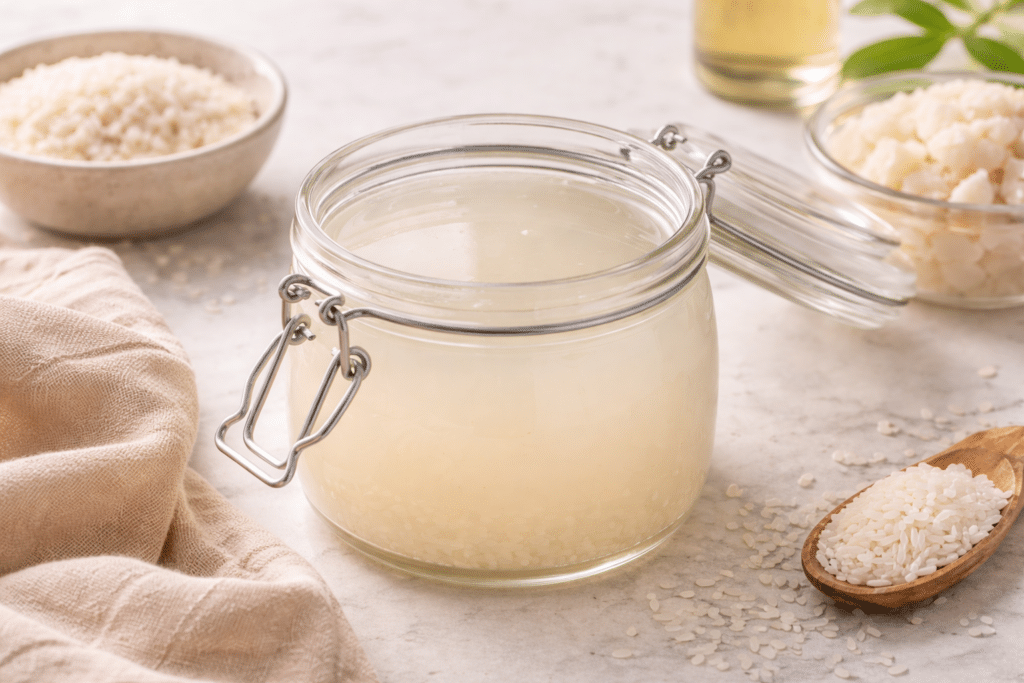
Rice water is often praised in hair care routines, but one of the first things many people notice is its smell. Depending on how it’s handled and stored, rice water can develop a strong or unusual scent that catches people off guard.
If you’ve ever wondered why rice water smells the way it does — or whether that smell means something is wrong — you’re not alone. Understanding what causes the scent can help set realistic expectations and make rice water easier to use as part of a hair routine.
What Does Rice Water Typically Smell Like?
Fresh rice water usually has a mild, starchy scent that’s fairly neutral. However, over time, that smell can become stronger, sour, or slightly fermented. This change is one of the most common reasons people question whether rice water is still suitable to use.
The scent itself isn’t necessarily a sign of quality or effectiveness — it’s simply the result of natural processes taking place in the water.
Why Rice Water Can Develop a Strong Smell
Rice water contains natural starches and nutrients released from the rice. When these components sit in water, especially at room temperature, they begin to break down. As this happens, the scent of the water can change.
Exposure to air, warmth, and time all influence how noticeable the smell becomes. This is why rice water prepared at different times or stored in different ways can smell stronger or milder.
What the Smell Usually Indicates
A stronger smell typically indicates that the rice water has been sitting for longer or has undergone natural changes. This doesn’t automatically mean it’s unsafe or unusable, but it does explain why the scent can be surprising.
For many people, the smell is simply a sensory preference issue rather than a problem with the rice water itself.
Is a Strong Smell Always a Bad Thing?
Not necessarily. Some people expect rice water to smell neutral, while others are already familiar with stronger natural scents in DIY skincare and hair care products.
That said, personal comfort matters. If the smell feels unpleasant or overwhelming, many people choose to stop using it or limit how it fits into their routine.
Why Rice Water Smell Varies from Person to Person
Perception plays a big role in how rice water is experienced. Factors such as sensitivity to scent, previous experience with natural products, and how rice water is incorporated into a routine all influence whether the smell feels noticeable or mild.
Because of this, there’s no single “correct” expectation when it comes to how rice water should smell.
How People Work Around the Scent in Hair Routines
Rather than focusing on changing the rice water itself, many people adjust how they use it. This might include pairing it with other steps in a hair routine or using it at times when scent is less noticeable.
Understanding that rice water naturally has a scent helps remove some of the uncertainty around using it.
Final Thoughts
A strong smell in rice water is usually the result of natural changes over time, not a sign that something has gone wrong. By understanding why rice water smells the way it does, it becomes easier to decide whether and how it fits into your hair care routine.
As with many DIY beauty ingredients, personal preference and comfort play a key role.