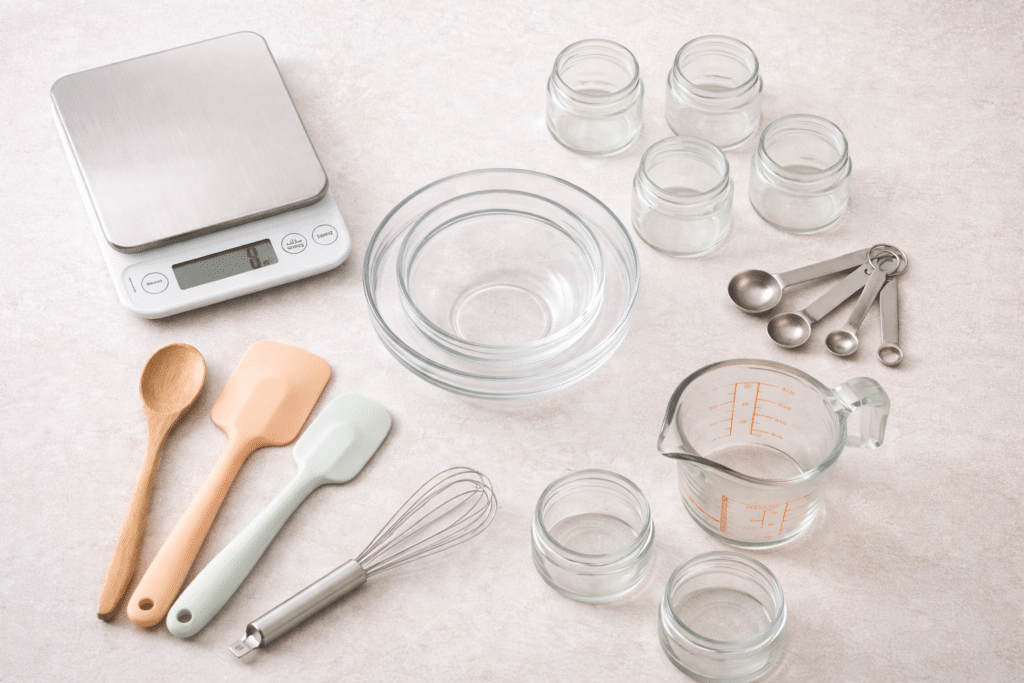
DIY beauty projects don’t require a professional lab or expensive equipment. In fact, most DIY beauty makers rely on a small collection of simple, reusable tools that make projects easier, cleaner, and more consistent. Whether you’re mixing a sugar scrub, blending a body butter, or pouring lip balm into jars, having the right tools on hand helps turn DIY beauty into an enjoyable creative hobby rather than a messy experiment.
This guide walks through the most commonly used tools in DIY beauty projects, explains what each one is used for, and helps beginners understand what’s worth having — and what’s optional.
Why Tools Matter in DIY Beauty
DIY beauty is about creativity and experimentation, but tools play an important role in keeping projects organised and repeatable. The right tools can help:
- Measure ingredients accurately
- Keep mixtures consistent in texture
- Reduce waste and mess
- Make small-batch projects easier to replicate
- Improve presentation for jars or gifts
Most tools are reusable and can be used across many different DIY beauty projects.
Essential Measuring Tools
Accurate measuring helps ensure consistency from batch to batch, especially when working with oils, butters, and dry ingredients.
Common Measuring Tools
| Tool | Typical Use |
|---|---|
| Measuring spoons | Small quantities of oils, waxes, powders |
| Measuring cups | Larger batches of scrubs or soaks |
| Digital kitchen scale | Weighing butters, waxes, and oils |
| Heat-safe glass measuring jug | Melting and pouring ingredients |
Many DIY creators prefer weighing ingredients rather than measuring by volume, as it allows for easier scaling and consistency.
Mixing & Blending Tools
Mixing tools help combine ingredients evenly and create smooth textures.
Popular Mixing Tools
| Tool | Purpose |
|---|---|
| Silicone spatula | Scraping bowls and mixing thick blends |
| Whisk | Combining lighter mixtures |
| Spoon or palette knife | Stirring scrubs and balms |
| Hand mixer (optional) | Whipping body butters |
Silicone tools are especially popular because they’re easy to clean and don’t absorb oils or fragrances.
Heat & Melting Tools
Many DIY beauty projects require gentle heating to melt waxes or solid butters.
Common Heat Tools
| Tool | Why It’s Used |
|---|---|
| Double boiler | Gentle, controlled melting |
| Heat-safe glass bowls | Melting ingredients over water |
| Saucepan | Base for a DIY double boiler |
| Thermometer (optional) | Monitoring melt temperatures |
A simple saucepan and heat-safe bowl are often enough for most projects.
Containers & Storage Tools
Once a project is finished, containers help store and present the final product.
Popular Container Types
| Container | Typical Use |
|---|---|
| Glass jars | Scrubs, body butters, balms |
| Small tins | Solid balms and perfumes |
| Dropper bottles | Oils and liquid blends |
| Roll-on bottles | Perfume oils |
Clear glass containers are especially popular for showcasing textures and layers in DIY projects.
Clean-Up & Safety Tools
Keeping tools clean helps maintain a tidy workspace and makes DIY projects more enjoyable.
Helpful Clean-Up Tools
- Paper towels or reusable cloths
- Mild dish soap for oily residue
- Rubbing alcohol for surface cleaning
- Labels or masking tape for marking jars
Many DIY creators clean tools immediately after use to prevent residue buildup.
Optional Creative Tools
These tools aren’t essential but can add convenience or creativity.
| Tool | Benefit |
|---|---|
| Piping bags | Filling jars neatly |
| Funnels | Transferring liquids |
| Mini spatulas | Small containers |
| Labels or tags | Organising and gifting |
Optional tools are often added gradually as DIY projects evolve.
Building a Simple DIY Beauty Tool Kit
A beginner-friendly toolkit might include:
- Measuring spoons and cups
- A silicone spatula
- One heat-safe glass bowl
- A saucepan for melting
- A few reusable glass jars
Most DIY beauty tools overlap across different project types, making them a practical long-term investment.
Final Thoughts
DIY beauty doesn’t require specialised equipment to get started. With a handful of basic tools, it’s possible to explore a wide range of creative projects at home. Over time, many makers customise their toolkit based on personal preferences, project types, and creative goals.
The focus of DIY beauty is creativity, experimentation, and enjoyment — tools simply make the process smoother and more enjoyable.