DIY beauty projects often begin with a simple idea, but the most rewarding part of the process is how that idea gradually takes shape. From early inspiration to a finished project ready to use or gift, DIY beauty follows a creative flow that blends planning, experimentation, and personal expression.
Unlike mass-produced products, DIY beauty projects are not rushed or fixed to a single outcome. Each stage allows room for creativity, making the process just as enjoyable as the finished result. Understanding this creative flow helps projects feel more intentional and enjoyable rather than overwhelming.
Where DIY Beauty Ideas Usually Begin
Most DIY beauty projects start with inspiration rather than a strict plan. Inspiration might come from a season, a preferred texture, a color palette, or even the desire to create something small and meaningful.
Some makers begin with a visual idea, while others start with a scent or a specific type of project they want to explore. This early stage is about collecting ideas, not making decisions. Many people keep notes, save images, or reflect on past projects to guide their next creative direction.
This open-ended approach aligns closely with ideas shared in how to find inspiration for DIY beauty projects, where creativity is encouraged before structure.
Shaping an Idea Into a Clear Project
Once an idea feels interesting, the next step is giving it some direction. This doesn’t require complex planning, but it helps to clarify a few simple details such as the type of project, the desired look, or how it will be used.
At this stage, many makers focus on narrowing choices rather than expanding them. Deciding on a general style or purpose keeps projects manageable and enjoyable. This step is especially helpful for those planning multiple projects, as discussed in planning DIY beauty projects throughout the year.
Exploring Texture, Color, and Scent
As a project takes shape, creative choices around texture, color, and scent become more prominent. These elements influence how a finished project looks, feels, and is experienced during use.
Texture affects the sensory experience, while color helps set the mood or visual identity. Scent adds an emotional layer, often shaping how a project is remembered or enjoyed. Together, these elements allow each project to feel personal rather than formula-driven.
For a deeper look at how these elements work together, see the role of texture, color, and scent in DIY beauty projects.
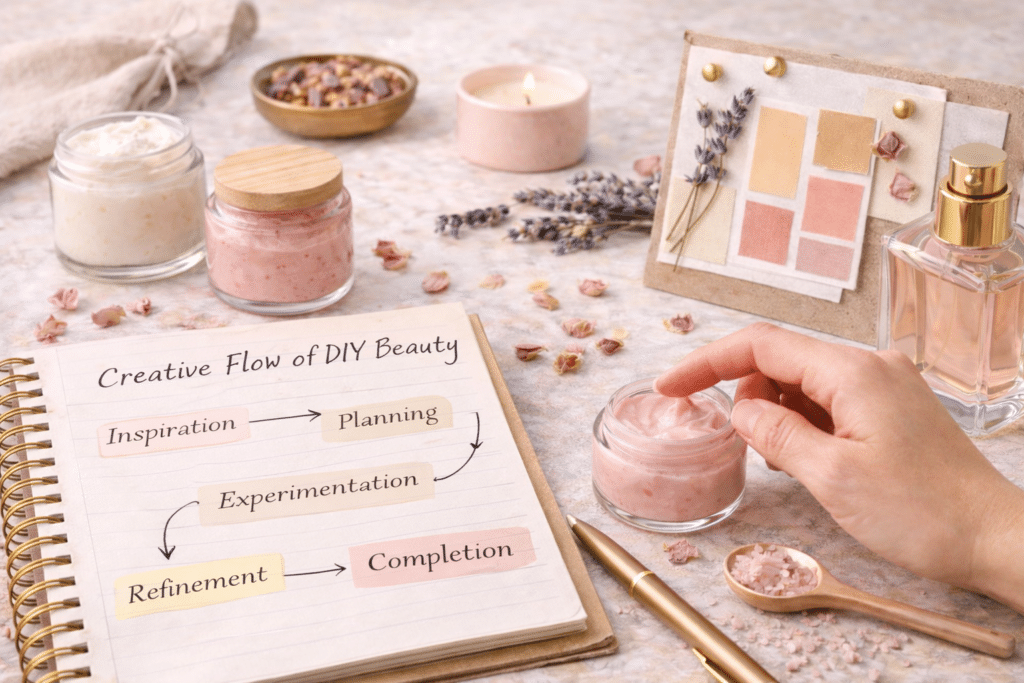
The Creative Flow of a DIY Beauty Project
| Stage | Focus | Creative Purpose |
|---|---|---|
| Inspiration | Collecting ideas | Sparking creativity |
| Planning | Clarifying direction | Reducing overwhelm |
| Experimentation | Testing variations | Personal expression |
| Refinement | Adjusting details | Creating balance |
| Completion | Final presentation | Enjoyment and satisfaction |
This flow is flexible rather than fixed. Some projects move quickly from inspiration to completion, while others evolve over time. Both approaches are part of the creative experience.
Knowing When a Project Feels Finished
One of the most valuable creative skills in DIY beauty is knowing when to stop adjusting and enjoy the result. Perfection isn’t the goal; satisfaction is.
Many makers find that a project feels complete when it reflects their original idea, even if it includes small imperfections. This mindset helps DIY beauty remain relaxing rather than stressful and encourages continued creativity.
Why the Process Matters as Much as the Result
The creative flow of DIY beauty is what transforms simple projects into meaningful experiences. By focusing on the process, makers build confidence, develop personal style, and enjoy creativity at their own pace.
This approach supports a broader creative lifestyle, where making is about exploration rather than outcomes. DIY beauty becomes not just a project, but an ongoing creative practice rooted in enjoyment and self-expression.