Your DIY beauty journey becomes richer and more meaningful as you begin to recognise your own creative style — a personal design language you return to again and again. Developing your own DIY beauty style isn’t about following every trend or copying a popular look — it’s about discovering what resonates with you, makes you feel inspired, and fits into your everyday life.
This post explores how to shape your unique DIY beauty style by learning from your inspirations, organising your creative process, and celebrating texture, colour, packaging, and intentionality. Along the way, we’ll link to related posts like How to Find Inspiration for DIY Beauty Projects and Exploring Handmade Beauty as a Creative Lifestyle, so you can see how this fits into your broader creative rhythm.
1. Discover What Draws You In
Every creative style starts with curiosity — noticing patterns in what naturally attracts you. Do you gravitate toward earthy tones, minimalist packaging, soft textures, floral scents, or rustic presentation? A simple observation exercise is to collect visuals that appeal to you: screenshots, photos, Pinterest boards, swatches, or sketches.
Over time, patterns emerge. These patterns become *your style cues* — elements that appear consistently in the projects you are drawn to. Recognising these cues is the first step toward shaping your DIY beauty identity.
2. Look Beyond Projects for Patterns
Inspiration often comes from unexpected places — not just other DIY posts or social feeds, but real life. Your favourite wardrobe colours, the walls in your home, favourite nature scenes, or even the style of your favourite café can influence how you want your DIY beauty projects to look and feel.
For some guidance on broadening your inspiration, revisit How to Find Inspiration for DIY Beauty Projects. Here are a few thoughtful prompts to help with discovery:
- What colours make you smile when you see them in your daily life?
- Do you love a calm, neutral palette or bold, energetic hues?
- What textures — soft, rough, shiny, matte — do you find most appealing?
3. Build a Visual Style Guide
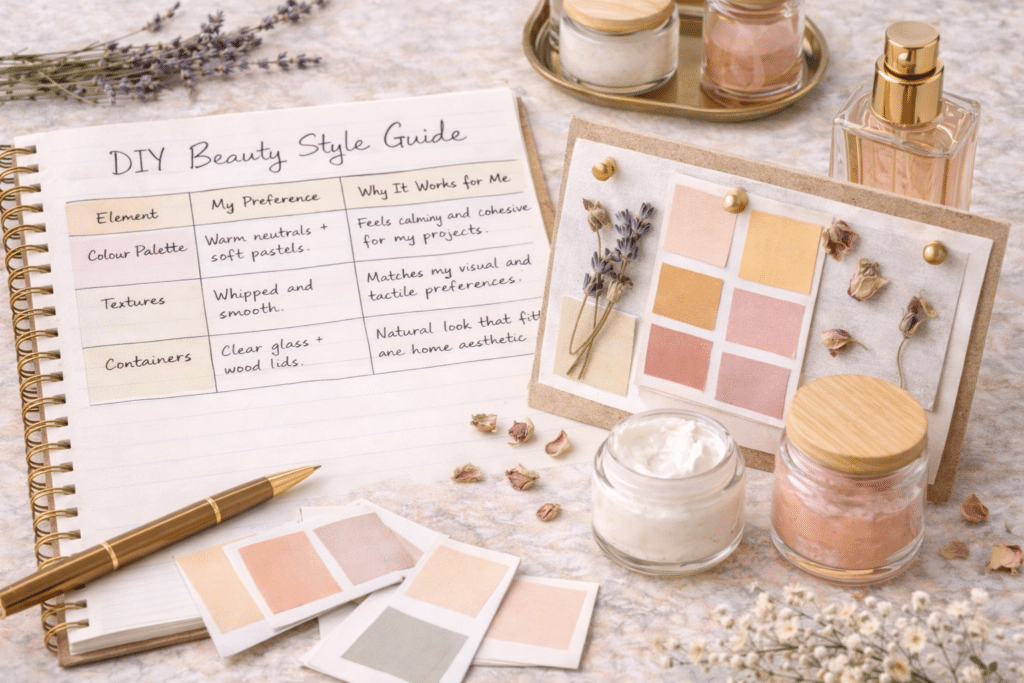
Once you’ve identified a few consistent cues — colours, textures, scent preferences, or container styles — it’s helpful to organise them into a *simple style guide*. This doesn’t have to be complicated. It can be a page in a notebook with swatches and notes or a digital mood board.
Here’s how a basic visual guide might look:
| Element | My Preference | Why It Works for Me |
|---|---|---|
| Colour Palette | Warm neutrals + soft pastels | Feels calming and cohesive for my projects |
| Textures | Whipped and smooth | Matches my visual and tactile preferences |
| Containers | Clear glass + wood lids | Natural look that fits my home aesthetic |
As you experiment, you can refine this table or expand it to include scent profiles, photography style, and packaging ideas.
4. Learn by Doing — With Intention
Your DIY beauty projects become stronger reflections of your style the more you make. But intention matters. Before you begin each new project, consider asking yourself:
- What feeling am I trying to evoke?
- Does this project fit the aesthetic cues I’ve chosen?
- How will I present this when it’s finished?
This intention-based approach ensures that creativity remains meaningful rather than purely functional. It also aligns well with long-term planning, like the kind discussed in Planning DIY Beauty Projects Throughout the Year. When a project becomes a deliberate exploration of your style, it feels more rewarding and less like a task to complete.
5. Evolve Your Style Over Time
One of the joys of creative hobbies is that your style isn’t fixed — it evolves. As you explore more projects, you might notice your tastes shift. That’s okay! Allow your DIY beauty style guide to change with you. Being flexible and reflective means you’re always learning something new about what you enjoy.
Growth doesn’t happen overnight. But staying open to change and letting your curiosity lead the way will enrich your DIY beauty experience and help you enjoy the journey rather than rushing toward an end product.
Final Thoughts
Developing your own DIY beauty style is a thoughtful blend of observation, experimentation, and intentional creativity. By paying attention to what inspires you, creating a visual style guide, and making projects with purpose, you’ll shape a cohesive and personal approach to DIY beauty that feels uniquely yours.
Remember, style isn’t about perfection — it’s about expression.