
DIY lip balm projects are often one of the first creative beauty projects people explore. While recipes and formats can vary, most lip balm projects rely on a small group of familiar ingredients that help shape texture, appearance, and overall experience.
Rather than focusing on outcomes or results, understanding why certain ingredients are commonly used can help makers feel more confident when exploring small-batch lip balm projects. Each ingredient plays a specific role in how a lip balm looks, feels, and performs during everyday use.
Why Ingredient Choice Matters in DIY Lip Balm
Unlike mass-produced products, DIY lip balm projects are typically made in small batches with flexibility in mind. Ingredient choices influence consistency, firmness, glide, and even how the finished balm holds up over time.
Many makers enjoy experimenting with ingredient combinations as part of the creative process, similar to the way texture and scent are explored in other DIY beauty projects. This mindset aligns closely with the ideas discussed in understanding ingredients in DIY beauty.
Waxes: Creating Structure and Shape
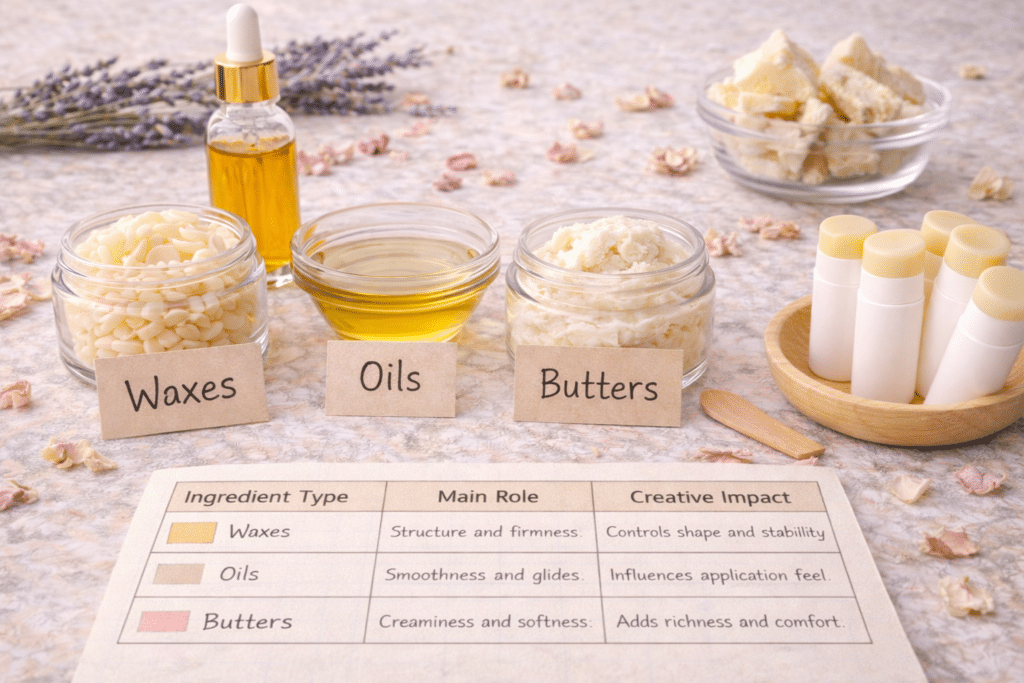
Waxes are a foundational ingredient in most DIY lip balm projects. They provide structure, helping the balm maintain its shape whether it is poured into tubes, tins, or small jars.
Different waxes can produce slightly different textures, ranging from firm and solid to softer and more flexible. Makers often adjust wax levels depending on whether they prefer a balm that feels lightweight or one that offers more resistance when applied.
Because waxes influence stability, they are usually balanced carefully with oils and butters rather than used alone.
Oils: Supporting Smooth Application
Oils are commonly included to help lip balms glide smoothly during use. They soften the firmness created by waxes and contribute to the overall feel of the balm on the lips.
Lightweight oils often create a smoother, faster-absorbing feel, while heavier oils may add richness and a more noticeable coating. Choosing oils is often a personal preference, guided by texture and comfort rather than strict rules.
This balance between structure and smoothness is one of the reasons lip balm projects are popular with beginners, as discussed in what to expect from your first DIY beauty projects.
Butters: Adding Creaminess and Softness
Butters are often used to introduce a creamy element to DIY lip balm projects. They help soften the overall texture and can make the balm feel more cushioned when applied.
Depending on the type and amount used, butters can make a balm feel richer or more velvety. Some makers prefer minimal amounts for a lightweight finish, while others enjoy a thicker, more substantial texture.
Because butters also influence appearance, they play a role in how a finished lip balm looks inside its container.
Optional Elements: Scent and Visual Appeal
Beyond the core structure ingredients, some DIY lip balm projects include optional elements such as subtle scents or natural color tones. These additions are often chosen for creative expression rather than necessity.
Scent choices can make a project feel more personal or seasonal, while soft color variations help distinguish different batches or gift sets. These creative decisions reflect the broader appeal of DIY lip balm as a small-batch project, explored further in why DIY lip balm is popular for small-batch creative projects.
How Ingredients Work Together
Successful DIY lip balm projects rely on balance rather than complexity. Waxes, oils, and butters each serve a purpose, and adjusting one often affects the others.
| Ingredient Type | Main Role | Creative Impact |
|---|---|---|
| Waxes | Structure and firmness | Controls shape and stability |
| Oils | Smoothness and glide | Influences application feel |
| Butters | Creaminess and softness | Adds richness and comfort |
Understanding these roles allows makers to experiment thoughtfully without needing to follow rigid formulas.
A Creative Perspective on Ingredients
For many people, DIY lip balm is less about perfect results and more about enjoying the creative process. Ingredient choices become part of that experience, offering opportunities to adjust texture, appearance, and presentation over time.
This approach mirrors the broader creative mindset found across DIY beauty projects, where experimentation and personal preference guide each new batch.
Conclusion
Common ingredients used in DIY lip balm projects each play a clear and practical role. By understanding how waxes, oils, and butters contribute to texture and structure, makers can approach lip balm projects with confidence and creativity.
Rather than viewing ingredients as fixed rules, many DIY beauty enthusiasts see them as creative tools—allowing each lip balm project to evolve naturally through exploration and experience.