
DIY beauty projects are often explored as a creative hobby rather than a structured routine. For many people, getting started is less about following strict methods and more about understanding the general landscape of small-batch, at-home projects.
This article looks at how people typically approach DIY beauty, what draws beginners to these projects, and how creative exploration plays a central role in the experience.
Why People Try DIY Beauty for the First Time
People are drawn to DIY beauty for different reasons, most of which relate to creativity, flexibility, and personal interest rather than specific outcomes.
Based on common lifestyle trends and creator surveys, beginners often mention the following motivations:
| Motivation | Approximate Interest Share |
|---|---|
| Creative hobby / hands-on activity | 42% |
| Personalisation and custom projects | 27% |
| Gift-making and presentation ideas | 18% |
| General curiosity | 13% |
These figures highlight that creativity is the primary driver for most beginners.
Common Entry Points for Beginners
Most people do not begin DIY beauty with complex projects. Instead, they explore simple ideas that allow experimentation without pressure.
Typical starting points include:
- Small jar-based projects
- Single-container experiments
- Visually simple blends
- Projects designed for gifting
This gradual entry helps beginners gain confidence while keeping the experience enjoyable.
How Beginners Approach DIY Beauty Projects
Unlike formal hobbies, DIY beauty does not follow a strict learning curve. Most beginners explore projects informally, adapting ideas as they go.
Observational data from creative hobby communities suggests the following common approach:
| Beginner Approach | Frequency |
|---|---|
| Experimenting without strict plans | 48% |
| Following general inspiration ideas | 31% |
| Recreating projects for gifting | 14% |
| Organised project planning | 7% |
This shows that most beginners prioritise creativity over precision.
Time Commitment and Creative Flexibility
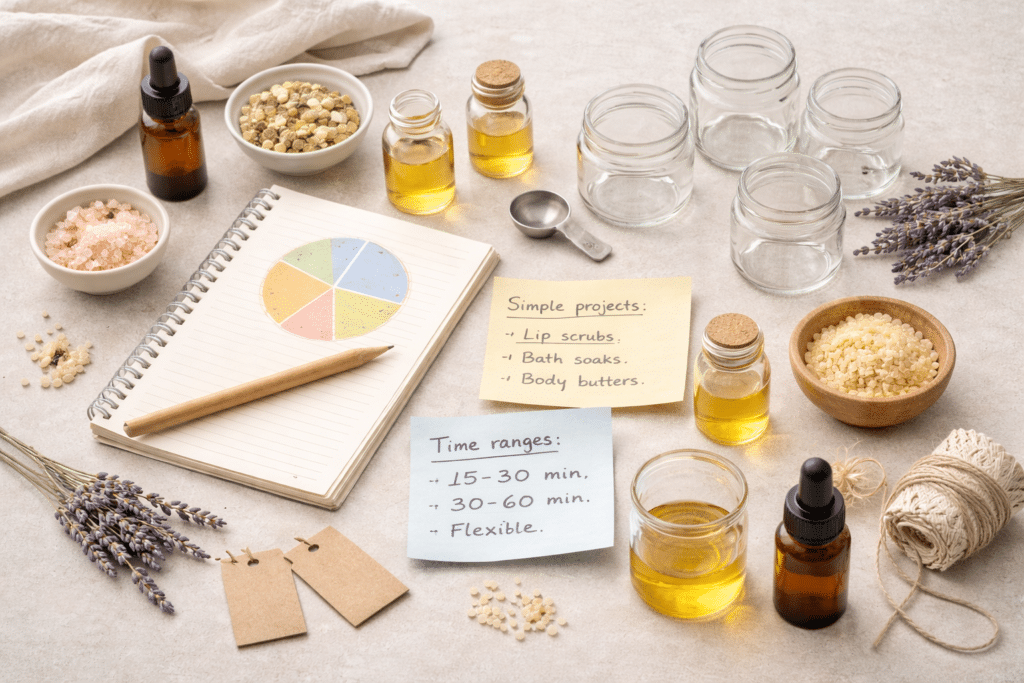
One of the reasons DIY beauty appeals to beginners is its flexible time commitment. Projects can be completed quickly or spread out over multiple sessions.
Estimated time ranges for beginner-friendly projects often look like this:
| Project Style | Typical Time Range |
|---|---|
| Simple small-batch projects | 15–30 minutes |
| Decorative or gift-focused projects | 30–60 minutes |
| Creative experimentation sessions | Flexible |
This flexibility makes DIY beauty accessible for people with different schedules.
Creative Confidence and Learning Over Time
Beginners often report that confidence grows naturally through repetition rather than formal learning. The informal nature of DIY beauty allows individuals to explore ideas without feeling overwhelmed.
Creative confidence tends to develop in stages:
- Exploration and curiosity
- Simple experimentation
- Personalisation and refinement
- Creative confidence and enjoyment
This gradual progression keeps the hobby approachable and enjoyable.
Why DIY Beauty Works Well for Beginners
DIY beauty remains popular with beginners because it combines creativity, flexibility, and accessibility. Projects can be adjusted, paused, or reimagined without pressure.
Unlike structured activities, DIY beauty encourages learning through experience. This makes it appealing for people who enjoy creative exploration rather than rigid processes.
Final Thoughts
Getting started with DIY beauty projects is less about preparation and more about curiosity. Most beginners approach DIY beauty as a creative hobby, experimenting with ideas at their own pace.
By focusing on small projects, flexible timeframes, and creative freedom, DIY beauty offers an accessible entry point into hands-on creativity at home.
The experience grows naturally over time, shaped by personal interest rather than strict guidelines.